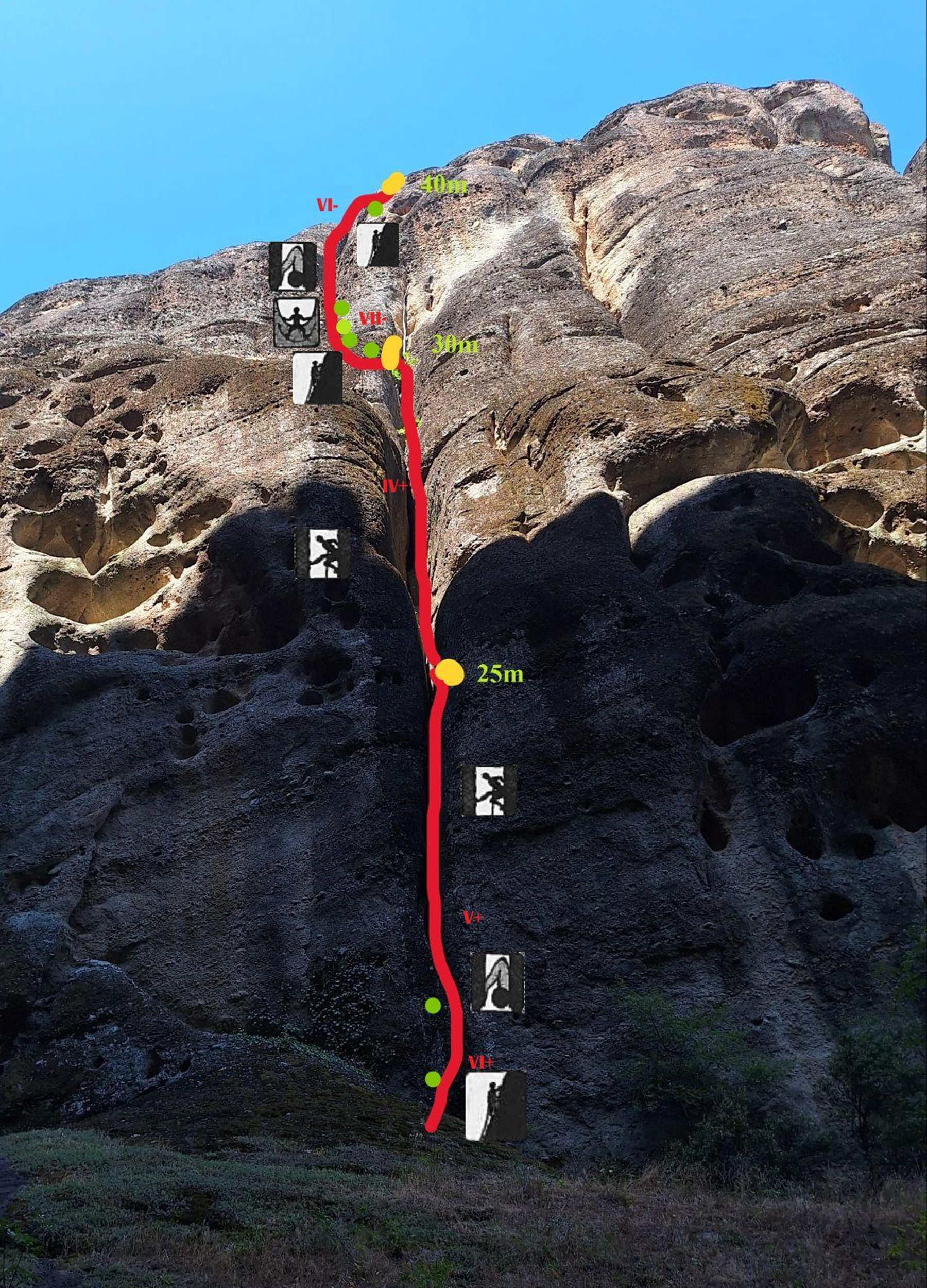
The first ascent of the route “Beekeeper” (VI-, 125m) was realized on 18/8/2024 by Th. Papagatsias - Chr. Papageorgopoulos.
The line, which had been attempted a few years earlier by G. Vaiou, moves to the left of “Quo vadis”.
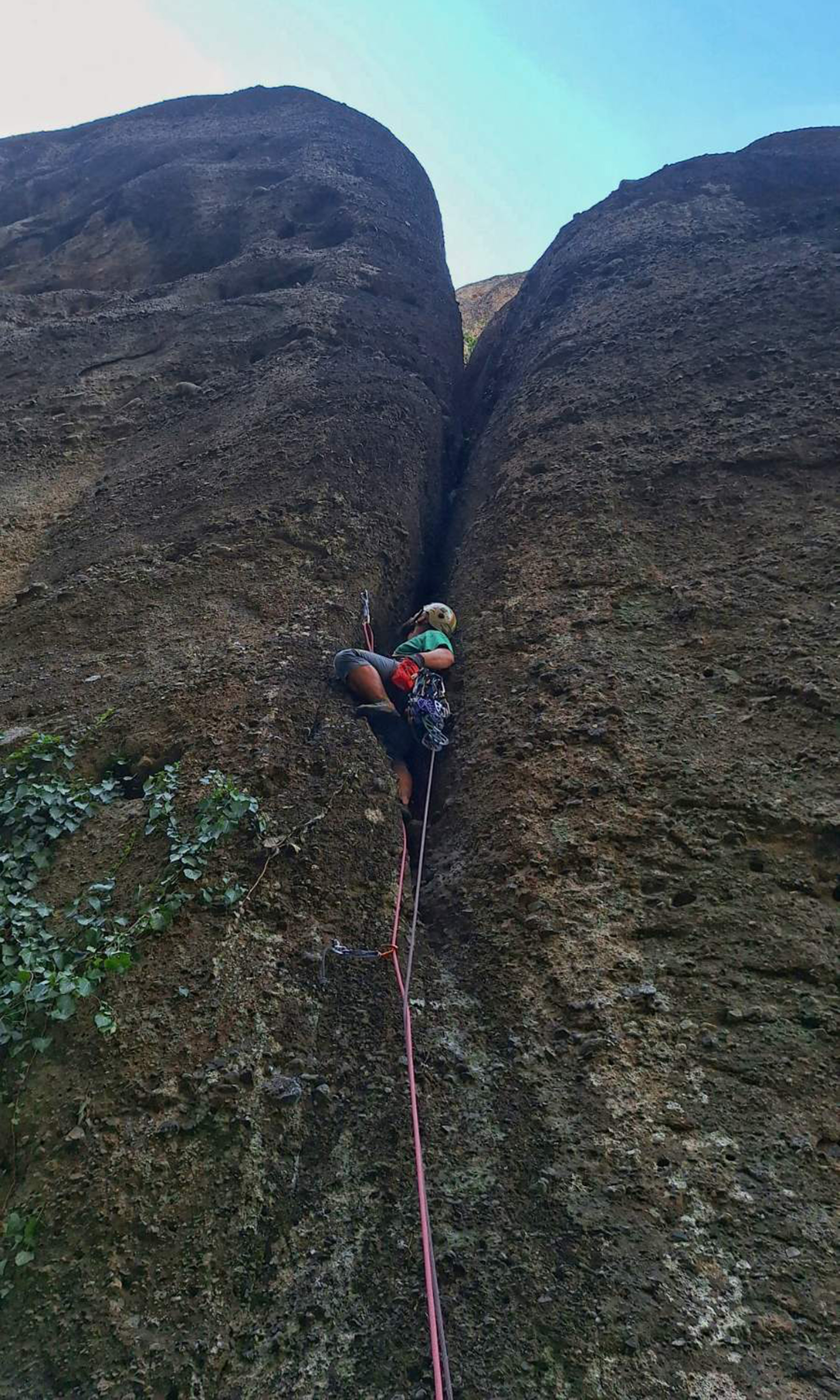
In general, the route follows a characteristic chimney, that can be well secured in the difficult passages. It is recommended for those who have some experience with the cracks of Meteora and want to climb something more difficult using removable gear.
On the 1st pitch (VI+, 25m) we start on a wall (VI+, 2 hangers) and finally enter a narrow chimney up to the belay.
On the 2nd pitch (IV+, 30m) we follow the enjoyable chimney (IV+) which can be secured with removable gear.
On the 3rd pitch (VII-, 40m) we start with a left traverse on a wall (4 hangers) and go straight up (VII-) to enter a gully (1 hanger). We continue to a shoulder crack (secured with removable gear) and the exit is from the right to a slab (VI-, 1 hanger).
Necessary gear for repeating the route is a series of friends (Camalot #0.75 - #5 and optionally #6) as well as some slings.
The return after completing the route can be done by rappelling from the same route or, for greater comfort, 20m left of the last belay there are the belays of the “Girionis” route from where we make 2 rappels, the first 45m to a ledge and the second 30m to the ground.
The opening of the route revealed something interesting about the history of climbing in Meteora. The climbers report that when they climbed “Girionis” they spotted a chimney next to it that seemed to have been climbed, but without having been completed. Considering it worth continuing, they learned who had attempted it and after making the relevant arrangements with them, they began to climb and equipping it. However, at the end of the 2nd pitch they found remains of a very old climb on the route, namely a large stick (about 4m) and some wooden wedges stuck in a crack, which end in a bees’ nest. The technique of climbing with wooden wedges in the rock was used by the locals throughout time, in order to reach points that were high on the rock, for various reasons. This means that the chimney must have already been climbed many times in the past, in traditional ways, apparently by a beekeeper, which is why the route was given this name. The stick of the 2nd pitch remains in place, so those who repeat the route are asked not to remove it.