The bouldering area of Agios Panteleimonas is located very close to the homonymous monastery of Penteli, at an altitude of approximately 800m and is oriented to the west. The rock is crystalline schist and this gives the field special characteristics. The rocks are more geometric in comparison to the amorphous limestone, while their color varies from red - orange to green - blue. The friction of the rock is very good, while it is also very friendly to the fingers, as the characteristic grips are pockets and rounded.
The area, although it was burned in the past, offers very beautiful views and because it is at a certain altitude, climbing is enjoyable in the summer too, but it is not recommended on days when there is a strong north wind. The location, the character of the rock and the moderate difficulty of the problems make Agios Panteleimonas a place not for hard training, but for spending some pleasant relaxing hours climbing.
Access
To access, we initially take the road that goes up to the summit of Penteli and when we meet the intersection for the Monastery of Agios Panteleimonas, we turn left and in 800m the road ends at the entrance of the monastery. Approximately 30m before the entrance, on our right, a dirt road leaves, which in 600m leads to the first two sections, the Red on the left of the road and the Orange on the right. If we continue for 200m, we reach a right turn, where we leave the road and follow goat tracks towards the top of the ridge, below which the Blue section is located. Almost at the top of the ridge there is a large iron cross and a large antenna. We can also reach this point from Dionysos with a tiring 45min hike, initially following the dirt road to Aloula, passing the climbing sectors of the first and second square and finally hiking a path to the ridge. The choice of Dionysos for access only makes sense if we want to climb first in its own sectors and then to Agios Panteleimonas.
Climbing activity
Kostas Tsoukleidis has been climbing the rocks since 1990, without it being known whether anyone else had climbed there before. The sections were organized in the fall of 1996 by Kostas Tsoukleidis with the help of Faethon Stathis, who added some difficult passages. The rocks are divided into three sections, the Red, the Orange and the Blue section. The last to be added was Boulder A with 5 routes established by Nikos Chatzis, Eva Moschovic and Kostas Tsoukleidis.
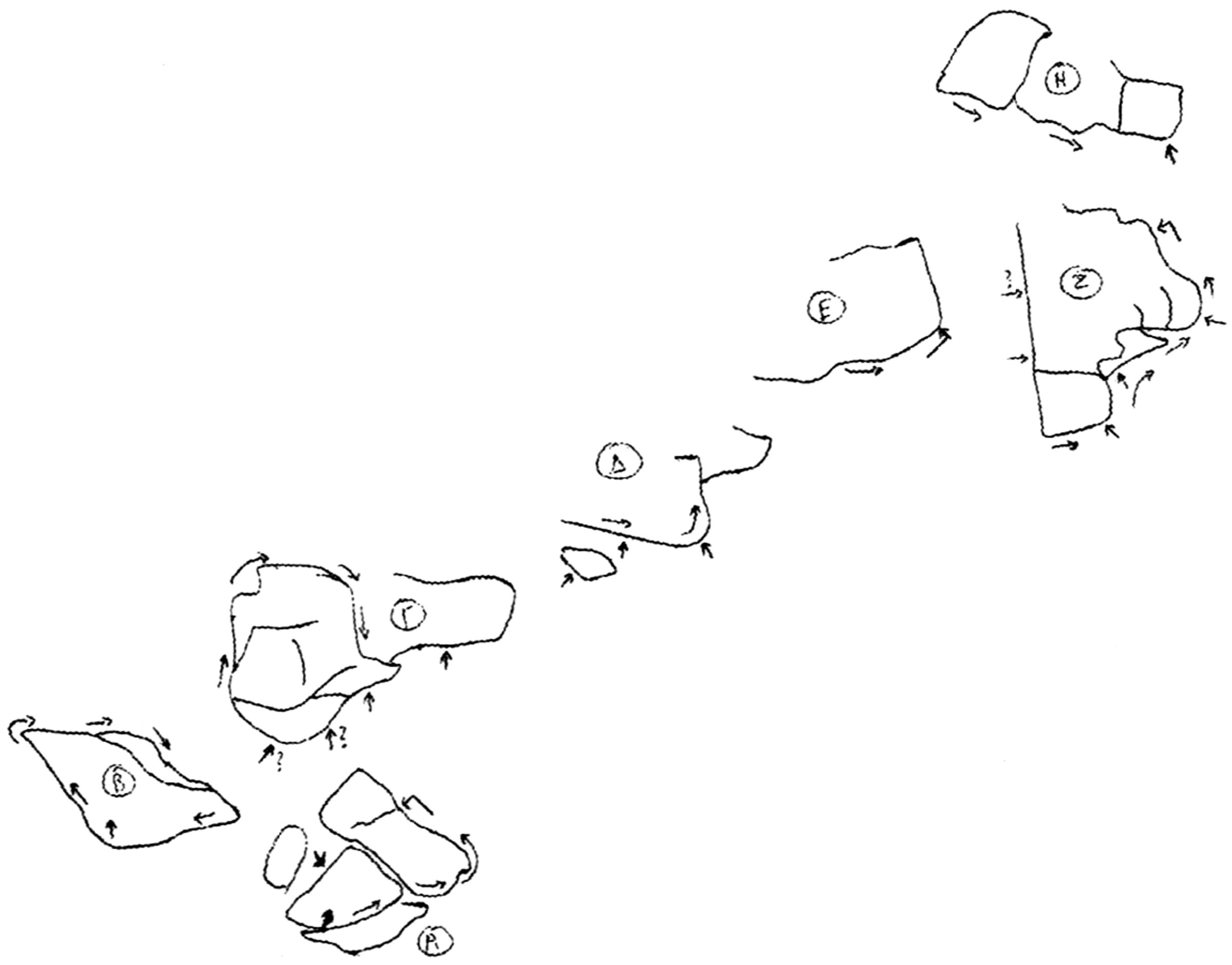
On all three sections, the passages that have not yet been done are marked with a "?", while the symbol "X" on the rocks means that we do not step or do not grab there.
Because there are no permanent belays at all, in order to do the problems with top-rope, we must have nuts and friends of all sizes, as well as long belts.
Red section
The Red section is the section with the highest problems, so much so that some require top-roping. There are 34 problems of difficulty from 3 to 7. Of these, 4 marked problems have not yet been done.
Orange section
The Orange section is the route with the lowest problems. The rock is excellent, with beautiful colors, but the problems have difficult ends. There are 23 problems of difficulty from 3 to 7+. Of these, 3 marked problems have not yet been done.
Rock A
Rock A is quite high and reaches 12m. There are 6 problems. Of these, the one facing downwards needs a top rope, while the other is unfinished. The ratings of the problems, from left to right, are: 5-, 6+, 6, 6+, unfinished, 5 (top rope).
Blue section
The Blue section is pleasant and on solid rock. Some of the problems require top-roping. There are 32 problems ranging in difficulty from 3 to 7. Of these, 2 marked problems have not yet been made.
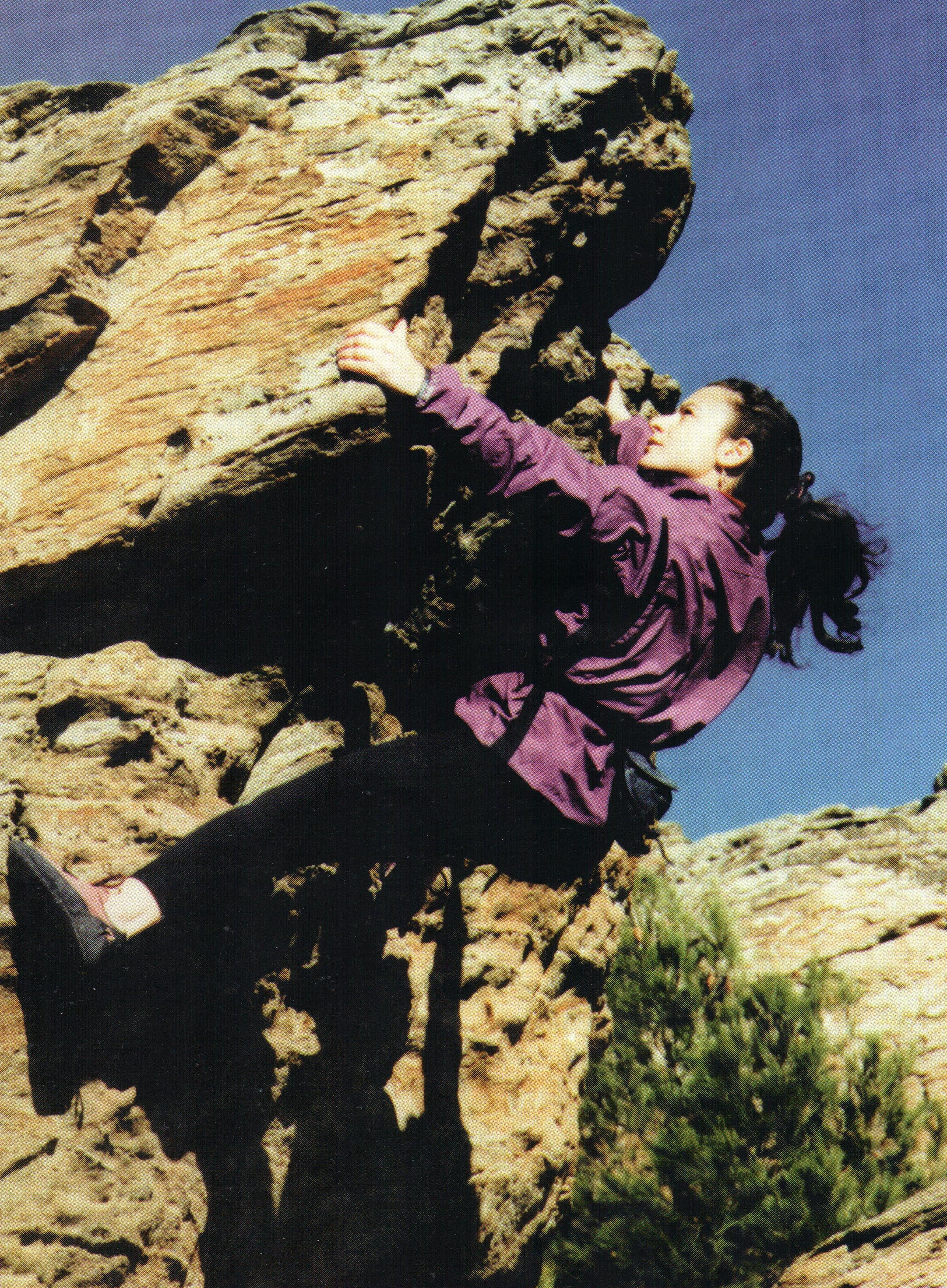
Eva Moschovits trying a problem.
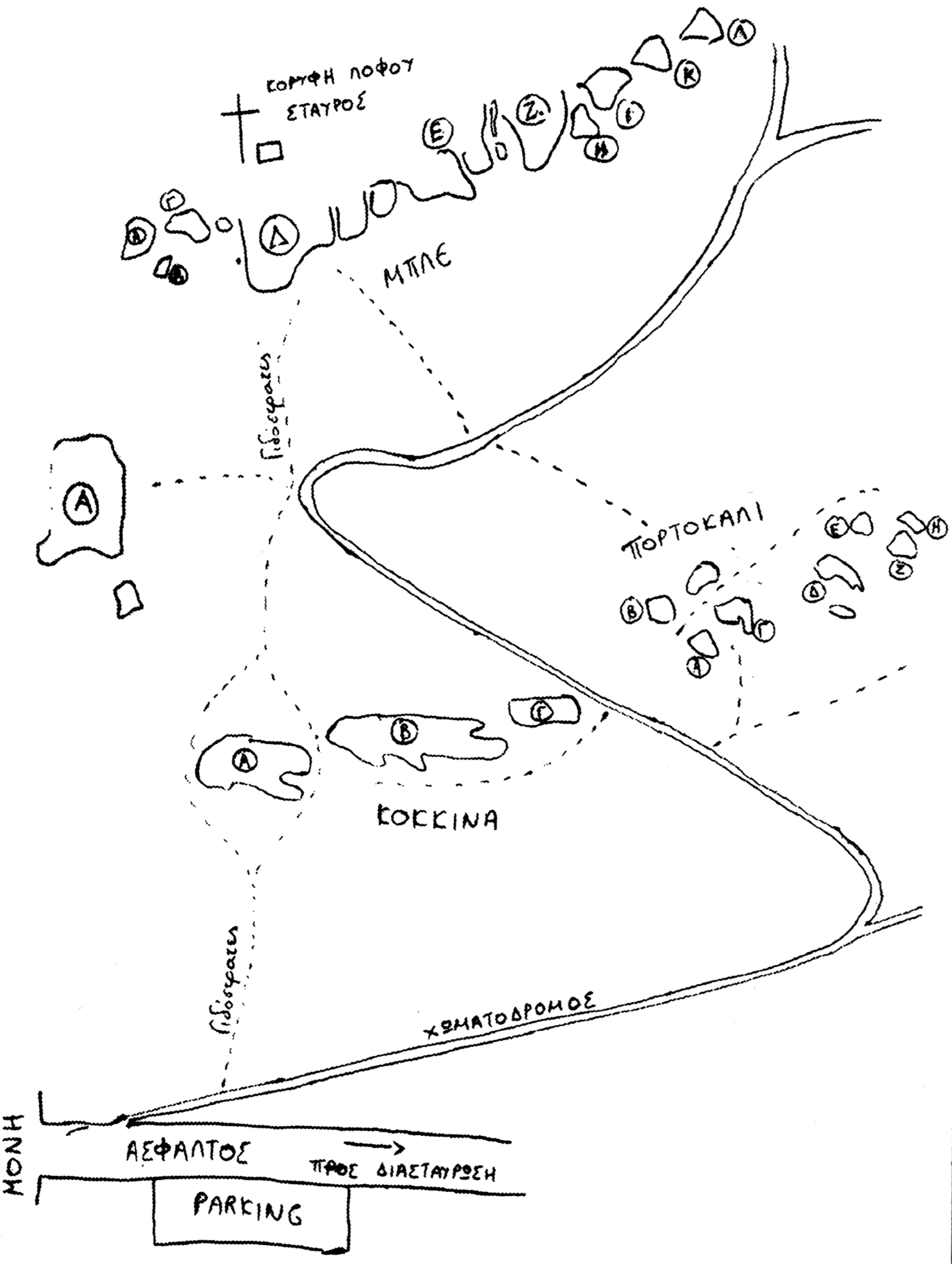
Access to the area.
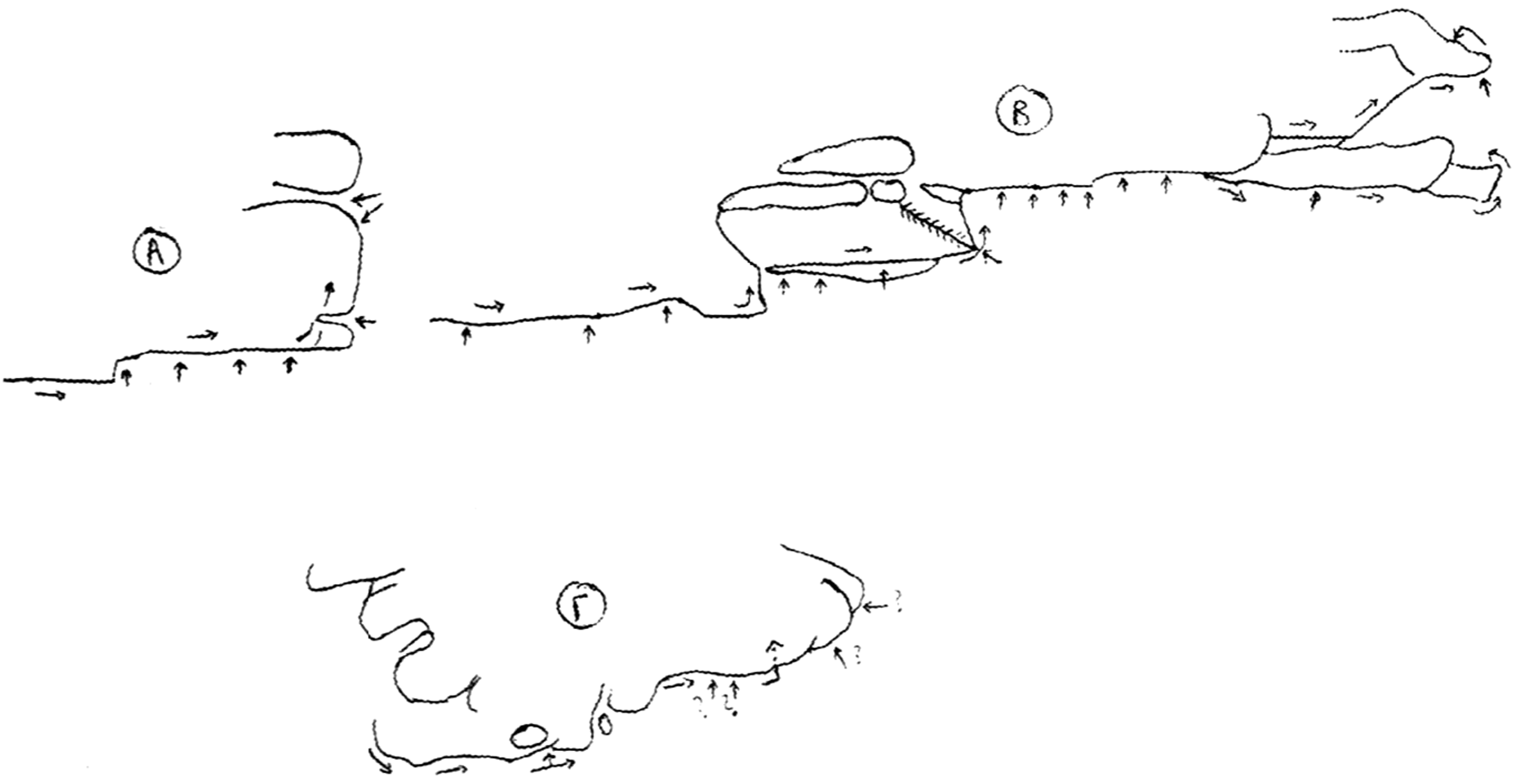
The red section.
The orange section.
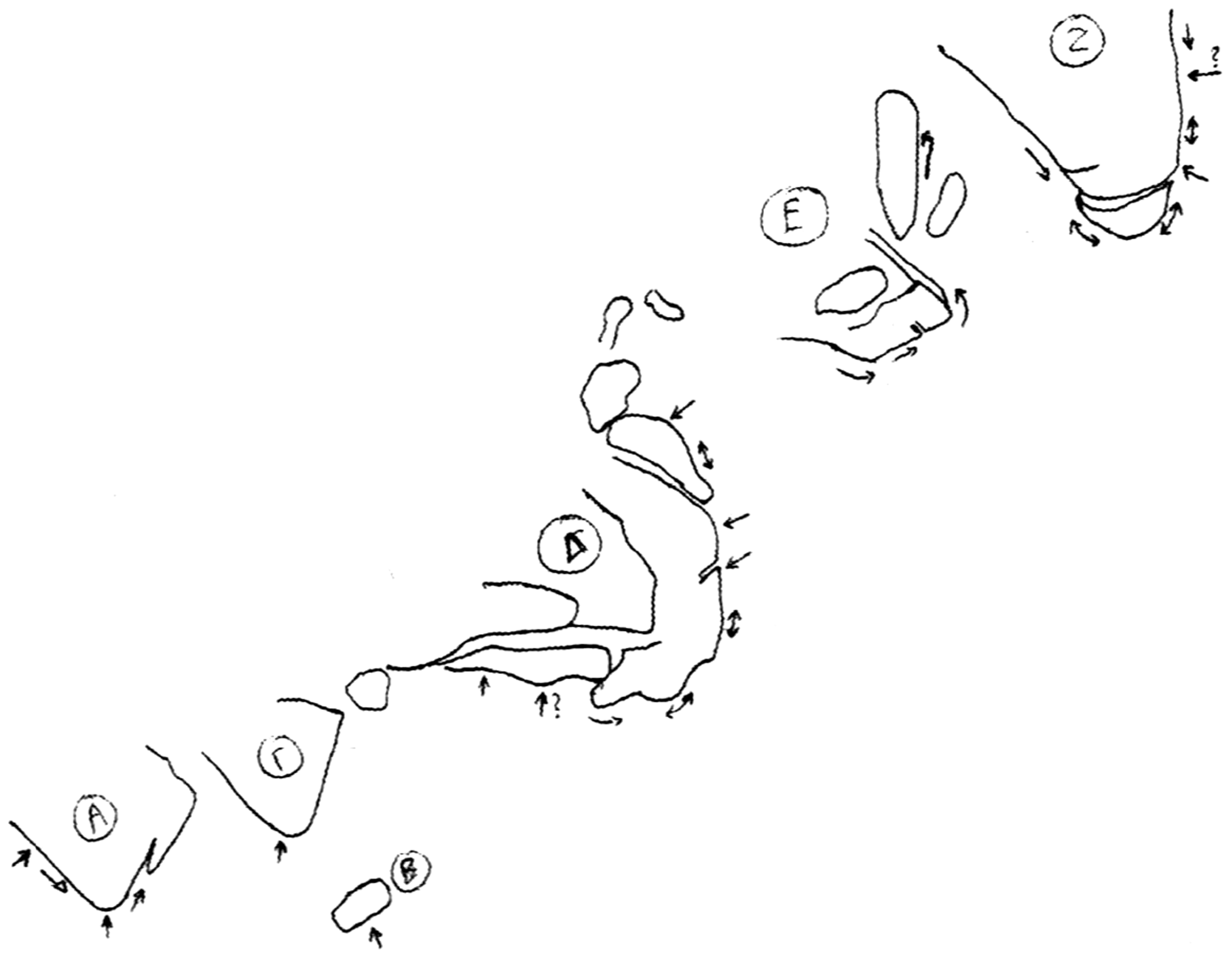
The left part of the blue section and boulder A.
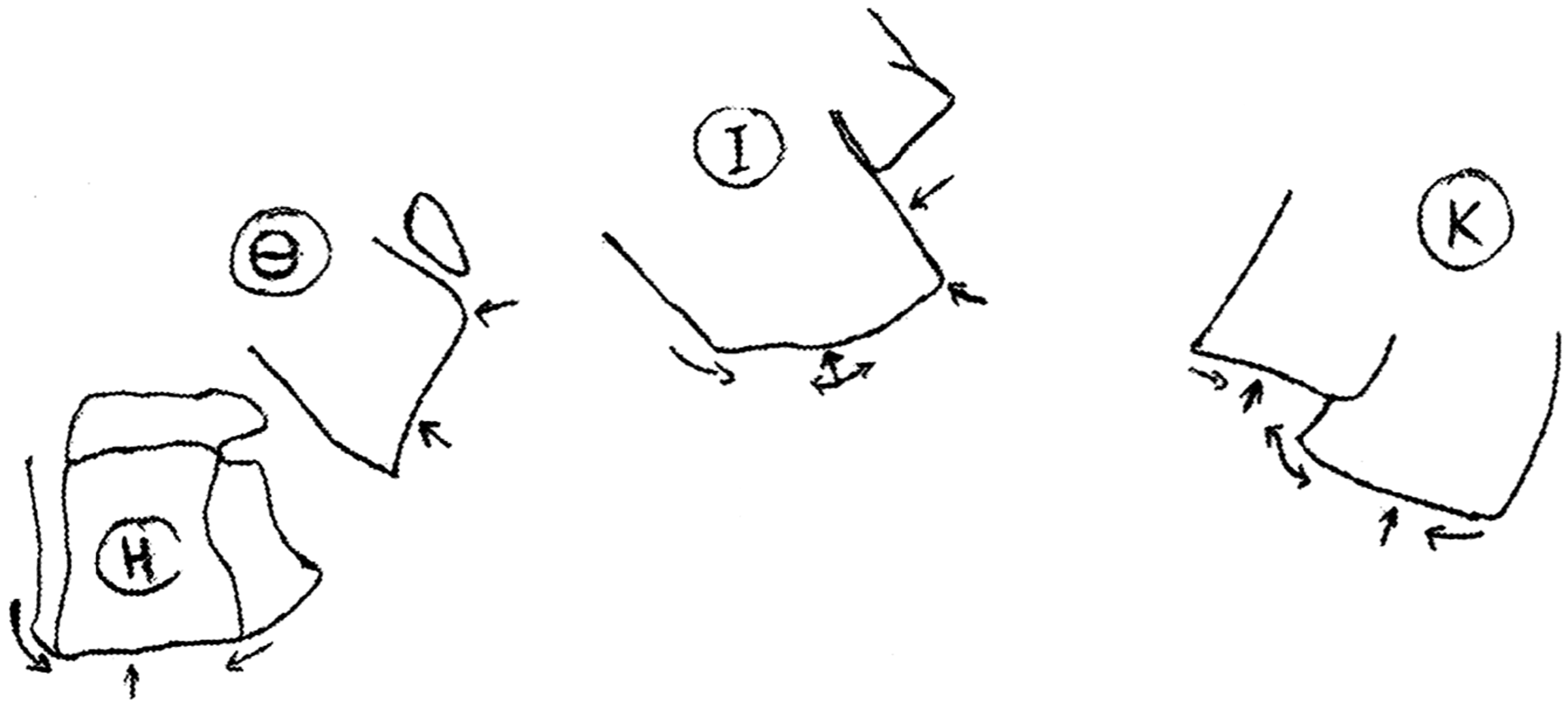
The right part of the blue section.