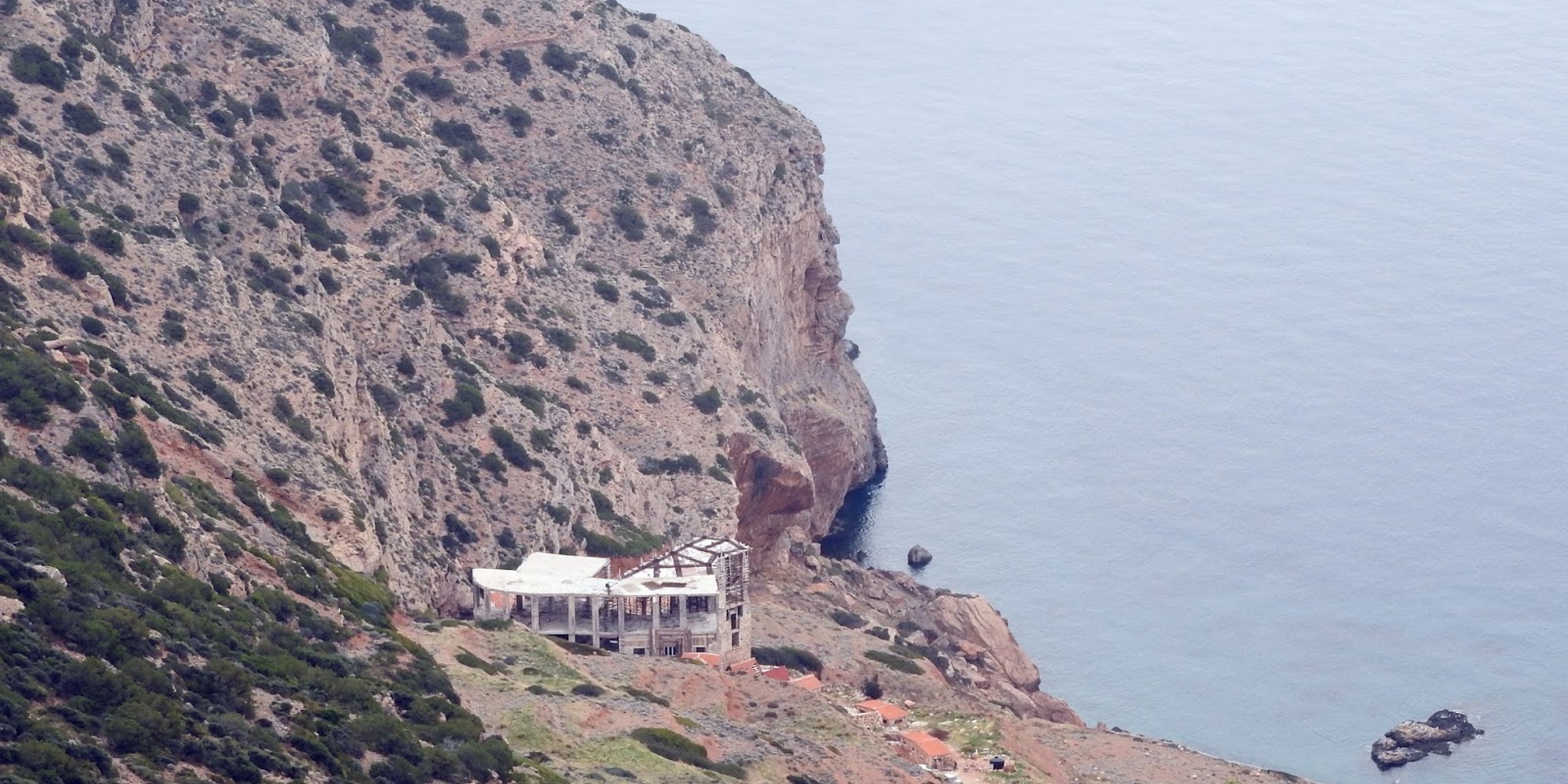
Mavrinora, or Mavrovouni (405m), is a hill line dominating the area north of the Kakia Thalassa settlement; to the northeast, it forms Akrotirio (Cape) Tsourgeli. As the cape drops steeply into the Euboean gulf, it creates an impressive rock face that once attracted the interest of Athenian rock climbers. Near the summit of Mavrinora, there is also a vertical cave, narrow but relatively deep (at least 20m), which has not yet been fully explored.
Access
To reach the base of the rock face from the Kakia Thalassa settlement, follow Areos street heading northeast and then take the dirt road to the right, heading toward the mysterious remnants of an abandoned building where, according to locals, the owners had planned to build a hotel there, but the site was designated as forest land, halting construction, though the scarred natural landscape was never restored to its original state. The base of the rock face lies approximately 100m from this building. However, the road to the building is blocked by a gate, and the site remains an inactive construction zone; consequently, it is not freely accessible.
Climbing activity
Seeking a new climbing location suitable for use during the summer, a group of eight members from the Athens branch of the EOS (Greek Mountaineering Association) found themselves one Saturday afternoon in the summer of 1961 at this crag. It appeared ideal for practice and training, particularly for aided climbing and traversing. From 1962 onwards, it came into widespread use among Athenian climbers, offering the chance to combine training with a swim in the sea.
The rock face stands 120m high, is completely vertical, and rises directly from the sea. Due to its orientation, it remains cool, falling into the shade after 10:00am, making it suitable for summer climbing, especially given the added appeal of combining the activity with a dip in the sea.
This crag is no longer in use. Therefore, avoiding it is recommended for safety reasons.
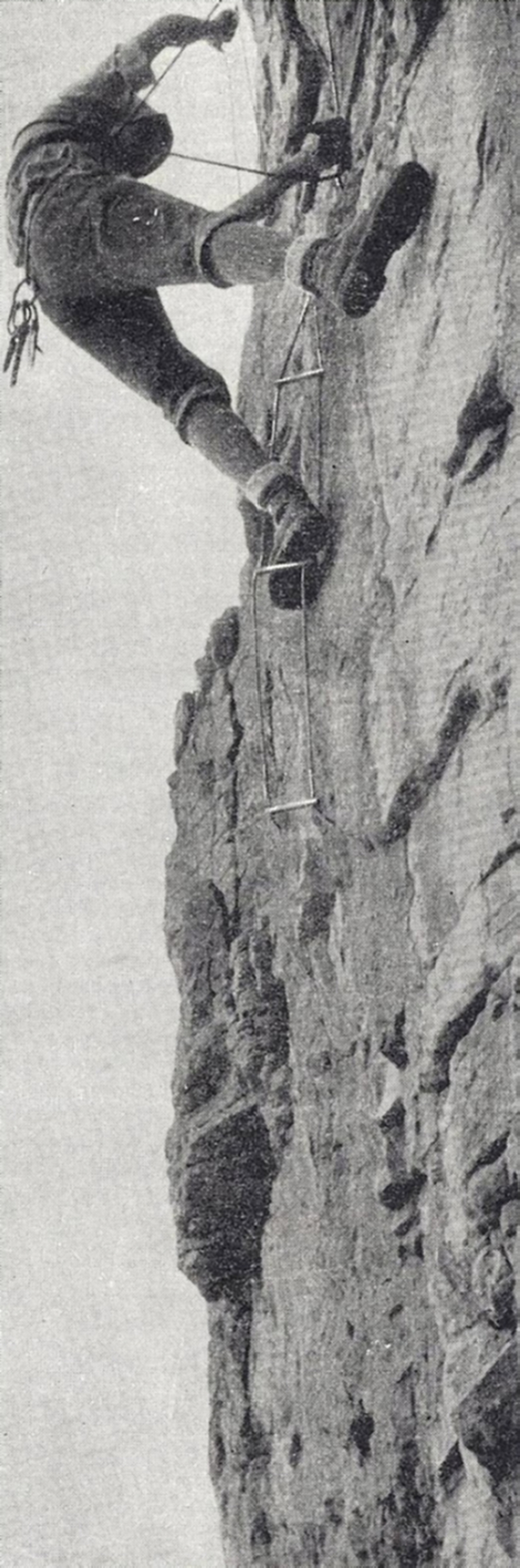
Practicing aided climbing on the crag in the 1960s.